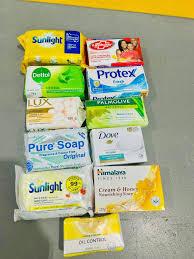
The Advertising Regulatory Board’s (ARB) partial upholding of Colgate-Palmolive’s complaint against Reckitt Benckiser marks a subtle but important shift in how cosmetic advertising claims will be judged in South Africa.
At its core, the ruling reinforces a principle that many cosmetic companies' claim development and scientific valorisation teams assume, but often underestimate in practice i.e. it is not enough for a claim to be scientifically defensible; it must also land truthfully in the mind of the consumer.
The Directorate rejected several prominent Dettol Soap claims such as “100% Better Odour Protection,” “100% Better Skin Protection,” and “3x Cleansing,” not because the underlying substantiating data was necessarily flawed, but because of how normal, reasonable consumers were likely to interpret them.
Presented boldly on pack, these claims created the strong impression of superiority over competing soaps, while the actual comparator, washing with water alone was disclosed only in smaller, back-of-pack disclaimers. The ARB concluded that this gap between technical truth and normal, reasonable consumer understanding rendered the claims misleading.
Importantly, the ARB clarified that this was not a breach of comparative advertising rules. A comparison to “water without soap” was not treated as a product-to-product comparison. However, this did not protect the advertiser. The decision makes clear that even where comparative rules do not apply, claims can still fail if they create an impression that does not match consumer expectations. In this case, the regulator found that modern consumers instinctively interpret “100% better” claims within the category context, meaning comparisons between competing soaps and NOT against an absence of product.
In contrast, the ruling upheld the “12h Protective Shield” claim. Here, Reckitts succeeded by anchoring its messaging in a more nuanced, biologically grounded narrative that the product “helps protect” the skin’s natural defences rather than dramatically enhancing them. This softer positioning was backed by a body of in vitro, in vivo, and expert-reviewed evidence, including independent validation. The ARB accepted that the claim, when read together with its qualifying language, was both substantiated and not misleading.
The decision signals a move toward stricter scrutiny of how claims are framed on pack, especially where bold headline language is softened only by secondary disclaimers. Regulators are increasingly focused on the net impression formed in seconds at shelf, rather than on technical footnotes. This raises the bar for governance, requiring closer alignment between legal substantiation, marketing expression and consumer interpretation.
The ruling places pressure on the continued use of absolute superiority claims, particularly those using phrases like “100% better” or “X times more” unless the comparator is immediately obvious and category-relevant. It also reinforces the growing advantage of claims rooted in credible science and physiology. Messaging built around supporting natural skin functions, maintaining balance, or protecting existing defences not only carries lower regulatory risk but also aligns with current consumer expectations of authenticity and transparency.
From a business and portfolio perspective, this ruling should prompt companies to take a proactive view. Brands with portfolios that rely heavily on bold, comparative or absolute claims may face elevated risk if those claims depend on less obvious benchmarks. There is also a reputational dimension i.e. being seen to overstate performance, even inadvertently, can erode trust in categories where credibility is already fragile.
Forward-looking companies will treat this ruling as an opportunity rather than a constraint. The most effective preparatory step is to audit claims through the lens of consumer interpretation, not just legal and regulatory compliance. If a claim requires explanation, it is likely already vulnerable. At the same time, strengthening substantiation frameworks, particularly through independent expert review before placement and clinically meaningful endpoints, will provide a more resilient foundation for future claims.
Bottom Line Take Out
This decision underscores a decisive shift from proving claims in the lab to proving them in the consumer’s mind. Brands that simplify, clarify and substantiate their claims in ways that align with real-world interpretation will not only reduce regulatory risk, but also build stronger, more defensible consumer trust.