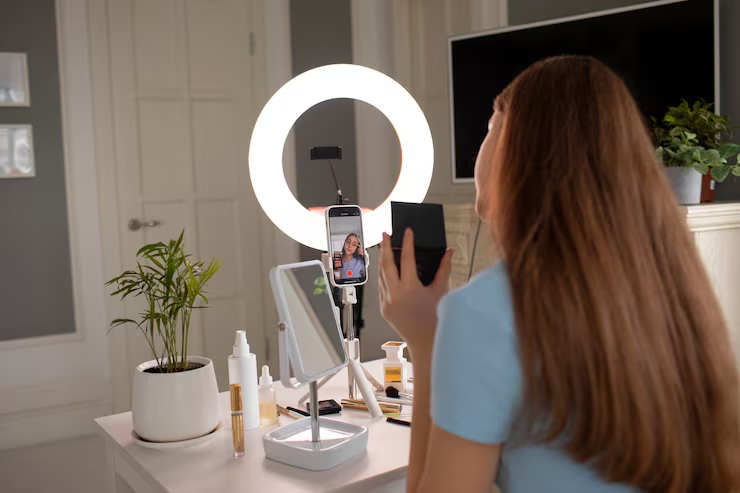
Influencer marketing has become one of the most powerful drivers of beauty product discovery across Africa. From skincare routines on TikTok to fragrance reviews on Instagram and product tutorials on YouTube, beauty influencers now occupy a central role in shaping consumer perception and purchase decisions. However, as influencer marketing matures, regulators and advertising self-regulatory bodies are increasingly clarifying that influencer content is advertising, and therefore subject to the same compliance obligations as traditional marketing.
Across several African markets, regulatory authorities are reinforcing that brand owners remain responsible for the claims made by influencers about their products. This includes ensuring that advertising is truthful, clearly identifiable as advertising, and supported by adequate scientific substantiation where claims are made. For cosmetic companies, this introduces a strategic compliance challenge: balancing the authenticity and creativity that make influencer marketing effective with the regulatory discipline required to avoid misleading claims or undisclosed commercial relationships.
Consideration of the regulation and self-regulation of influencer advertising in 3 major commercial hubs in Africa is important for cosmetic companies;
Together, these frameworks signal a broader regulatory direction across the continent: influencer marketing must meet the same standards of honesty, transparency and substantiation as any other form of advertising. Influencer marketing must be treated not as informal social chatter but as regulated commercial communication requiring governance, compliance oversight and clear briefing protocols.
SOUTH AFRICA
In South Africa, influencer marketing is regulated through Appendix K of the ARB Code of Advertising Practice, which specifically addresses social media and influencer marketing. Appendix K prescribes that advertising must be clearly identifiable through disclosusre labels such as #Sponsored, #Ad, #Advertisement etc. Influencers must also disclose any link to a particular brand where they have been paid, given free products or any other benefit to promote the brand for example by indicating "Paid Partnership" in the content. This is so that consumers can distinuish between paid promotion/advertising and organic non-advertising assets.
All claims influencers make of products they promote must be true, objectively substantiated and not misleading. Influencers must further relate their lived experience of products and not overstate product performance. The ARB has made it clear that brand owners remain responsible for influencer created content. Brandowners must thus train their appointed influencers on product claims to ensure that they comply with Appendix K. It is not sufficient defence for an influencer to claim, they expressed an opinion when they create a misleading impression about a product.
NIGERIA
Nigeria’s Advertising Regulatory Council of Nigeria (ARCON) has taken a more formal regulatory approach to advertising governance. Advertising—including influencer campaigns—must comply with national advertising standards and may require pre-vetting and approval of advertising materials depending on the medium and campaign structure.
For beauty brands operating in Nigeria's digital and influencer advertising space this means:
Nigeria’s approach reflects a broader trend toward formal regulatory oversight of digital advertising, particularly where large audiences and commercial endorsements are involved.
KENYA
In Kenya, influencer advertising falls within the broader oversight of the Competition Authority of Kenya (CAK) and consumer protection frameworks.
Key regulatory expectations emerging from Kenya that digital and influencer marketing must comply with include:
Although Kenya has not yet issued a single dedicated influencer advertising code equivalent to the ARB’s Appendix K, enforcement actions under competition and consumer protection law have reinforced that online endorsements must be transparent and truthful just like traditional advertising.
Vicarious Liability for Beauty Brands
One of the most misunderstood aspects of influencer marketing is vicarious liability. From a regulatory perspective, brands cannot outsource compliance to influencers. If an influencer claims: “This cream cures acne”, “Dermatologists recommend this serum” or “Clinically proven to remove wrinkles”
…the brand owner must be able to scientifically substantiate those claims. If not, the brand owner, not just the influencer, may face regulatory complaints, reputational damage or advertising withdrawal orders.
Managing Influencer Creative Licence Without Losing Sight Of Compliance
Influencer marketing works because it feels authentic and unscripted. However, regulatory compliance requires a structured approach to influencer engagement.
Effective beauty brands increasingly manage influencer campaigns through three governance tools:
A Structured Influencer Brief
Every influencer partnership should begin with a clear campaign brief outlining:
This allows influencers to maintain their creative voice while staying within advertising compliance boundaries.
Scientific Substantiation for Beauty Claims
Cosmetic claims made by influencers must be scientifically substantiated.
This includes claims relating to:
Without substantiation, even casual influencer statements can become regulatory liabilities.
Active Campaign Monitoring
Leading beauty brands now monitor influencer campaigns in real time to ensure:
This is particularly important on platforms like TikTok and Instagram, where spontaneous content can quickly go viral.
Influencer marketing is no longer an experimental marketing channel—it is a regulated advertising ecosystem.
For cosmetic companies operating across African markets, the most successful influencer strategies will combine:
Companies that integrate regulatory oversight into influencer campaigns will not only reduce compliance risk but also strengthen consumer trust in an increasingly scrutinised digital advertising environment.
Bottom Line Takeaway
Beauty influencers may be well and truly in the marketing chat, but regulators are already in the room. For cosmetic brands, the future of influencer marketing lies not in abandoning creativity but in professionalising it, through compliant messaging, substantiated claims and responsible brand governance.